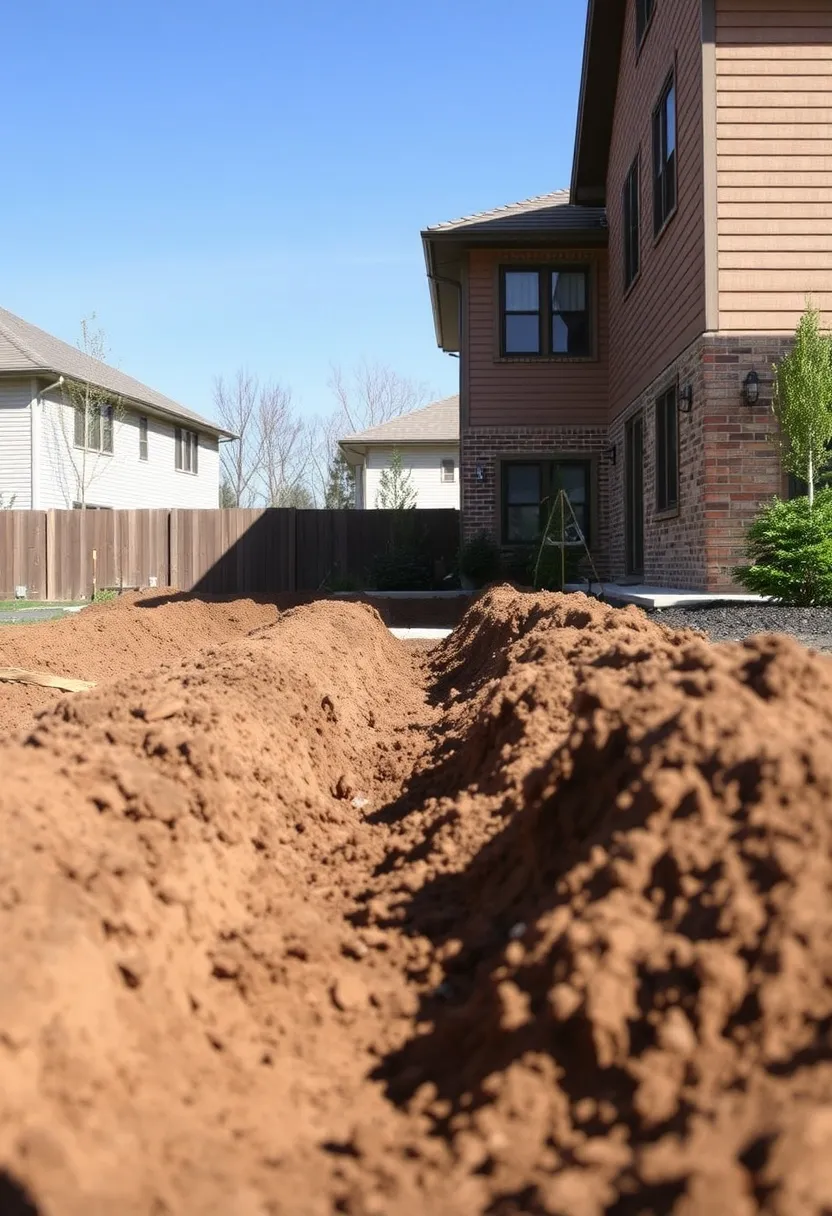
Foundation problems cost Oklahoma homeowners thousands—sometimes tens of thousands—of dollars in repairs. The culprit? Water. Poor drainage around your foundation is the leading cause of foundation damage in Oklahoma, where expansive clay soil and heavy spring rains create perfect conditions for foundation movement, cracking, and settling.
The good news? Most foundation drainage problems are preventable with proper grading and drainage solutions that cost a fraction of foundation repair expenses. Catching warning signs early can save you $5,000 to $25,000+ in foundation repairs.
Why Oklahoma Foundations Are Vulnerable
Oklahoma’s expansive clay soil behaves dramatically differently than stable soils in other regions. When saturated with water, clay can expand up to 10% in volume, creating enormous pressure against foundations. When dry, clay shrinks, leaving voids under foundations that cause settling.
This constant expansion and contraction cycle—accelerated by poor drainage that keeps soil around your foundation chronically wet—causes the foundation movement that leads to cracks, sticking doors, and structural problems.
The solution isn’t foundation repair—it’s preventing water from saturating soil around your foundation in the first place.
Warning Sign #1: Water Pooling Near Your Foundation
What to look for: Standing water, puddles, or soggy soil within 10 feet of your foundation after rain.
Why it matters: Water pooling near your foundation indicates negative grading (soil slopes toward house instead of away). This water saturates clay soil, causing expansion that pushes against your foundation. Over time, this pressure causes cracks and movement.
What to do: Regrade soil to create positive drainage (minimum 2% slope away from foundation for first 10 feet). This costs $2,000-$5,000 for most homes—far less than the $10,000-$25,000 foundation repair that results from ignoring the problem.
Warning Sign #2: Basement or Crawlspace Moisture
What to look for:
- Damp floors or walls in basement or crawlspace
- Musty odors
- Mold or mildew growth
- Efflorescence (white powdery deposits on concrete)
- Rust on metal fixtures
Why it matters: Moisture in basements or crawlspaces indicates water penetrating your foundation. This water comes from saturated soil around your foundation due to poor surface drainage or lack of foundation drain tile.
Health and structural risks:
- Mold creates respiratory problems and allergens
- Wood rot damages floor joists and structural supports
- Attracts termites and pests
- Reduces insulation effectiveness
- Damages stored items
What to do: Address surface drainage first (grading, downspout extensions), then consider foundation drain tile installation if moisture continues. Interior waterproofing is a last resort—it’s better to keep water away from foundation than manage it after it penetrates.
Warning Sign #3: Cracks in Foundation Walls
What to look for:
- Vertical cracks wider than 1/8 inch
- Horizontal cracks (most concerning)
- Diagonal cracks forming stair-step patterns
- Cracks that continue to widen
- Water seepage through cracks
Why it matters: Foundation cracks indicate movement caused by soil pressure or settling. While small hairline cracks are normal, widening cracks or horizontal/diagonal patterns suggest serious foundation movement typically caused by water-saturated soil.
What to do: Have foundation inspected immediately. If drainage problems caused the cracks, fixing drainage prevents further movement. Foundation repair may be needed for existing damage, but won’t prevent future problems without addressing the water issue.
Warning Sign #4: Doors and Windows That Stick
What to look for:
- Doors that suddenly stick or don’t close properly
- Gaps between doors and frames
- Windows difficult to open or close
- Diagonal gaps around door/window frames
Why it matters: These symptoms indicate foundation settling or movement. As your foundation shifts due to soil expansion/contraction, it causes the frame of your house to twist slightly, affecting door and window operation.
What to do: Don’t just plane down doors or adjust windows—this treats symptoms, not the cause. Investigate drainage around your foundation and address soil moisture issues causing the movement.
Warning Sign #5: Cracks in Interior Walls or Ceilings
What to look for:
- Cracks in drywall, especially above doors/windows
- Ceiling cracks running across rooms
- Separation between walls and ceiling
- Cracks that reappear after repair
Why it matters: Interior cracks indicate your home’s frame is moving—typically due to foundation settlement caused by soil shrinkage under portions of your foundation. This often results from uneven moisture levels where one part of your foundation sits in dry soil while another sits in saturated soil.
Hairline cracks from house settling are normal. Widening cracks, multiple new cracks, or cracks that return after repair suggest ongoing foundation movement.
What to do: Monitor crack width and progression. If cracks are growing, investigate foundation drainage. Even soil moisture around your entire foundation (achieved through proper drainage and strategic watering during drought) prevents this type of movement.
Warning Sign #6: Sloping or Uneven Floors
What to look for:
- Floors that feel slanted when walking
- Marbles or balls rolling to one side
- Visible gaps between floor and baseboards
- Furniture appears crooked when level
Why it matters: Sloping floors indicate foundation settling—one part of your foundation has sunk lower than another. This typically happens when soil under part of your foundation dries out and shrinks while other areas remain stable.
Severity guide:
- Less than 1/2 inch over 20 feet: Minor settling, monitor
- 1/2 to 1 inch over 20 feet: Moderate concern, investigate
- More than 1 inch over 20 feet: Significant settling, immediate inspection needed
What to do: Professional foundation inspection can determine severity and cause. Often, improving drainage and maintaining consistent soil moisture stops progression.
Warning Sign #7: Separation Between Walls and Ceiling/Floor
What to look for:
- Gaps between walls and ceiling
- Separation where walls meet floors
- Baseboards pulling away from walls
- Crown molding gaps
Why it matters: Visible separation indicates significant foundation movement. Your home’s frame is literally pulling apart as the foundation settles or shifts unevenly.
What to do: Immediate professional inspection. This level of separation suggests serious foundation issues requiring both drainage correction and potential foundation repair.
Warning Sign #8: Downspouts Dumping Water Against Foundation
What to look for:
- Downspouts ending at foundation wall
- Splash blocks positioned too close to house
- Downspout extensions missing or disconnected
- Erosion around downspout outlets
Why it matters: Roof water is concentrated—a typical Oklahoma home’s roof collects 600 gallons of water per inch of rain per 1,000 square feet. Dumping this water at your foundation is asking for problems.
Oklahoma challenge: Spring storms dropping 3-5 inches in hours mean your gutters may be dumping 1,800-3,000 gallons of water directly against your foundation during a single storm. This saturates clay soil, causing expansion and foundation pressure.
What to do: Extend downspouts 5-10 feet from foundation. Underground drainage pipes provide cleaner appearance while effectively moving water away from your home.
Warning Sign #9: Erosion Channels or Gullies in Your Yard
What to look for:
- Channels carved by water flow
- Exposed soil or plant roots
- Mulch or soil washed away
- Water flow paths toward your home
Why it matters: Erosion patterns show where water flows during rain. If water flows toward your foundation, it’s saturating soil around your home. Oklahoma’s clay soil doesn’t absorb water quickly—it runs across the surface, following the path of least resistance.
What to do: Regrade to redirect water flow away from foundation. Create swales (shallow drainage channels) to intercept and redirect water. French drains may be needed for persistent problems.
Warning Sign #10: Chronically Wet Areas in Your Yard
What to look for:
- Areas that stay soggy long after rain
- Poor grass growth in damp areas
- Water-loving plants thriving (indicator species)
- Moss or algae growth
Why it matters: Chronically wet areas indicate poor overall drainage. If these areas are near your foundation, water is likely affecting your foundation even if you don’t see standing water directly against your house.
Oklahoma factor: Clay soil drains slowly. Areas that stay wet for days after rain indicate water has nowhere to go—and it may be moving toward your foundation underground.
What to do: Install French drains, catch basins, or improve overall yard grading. Creating proper drainage paths ensures water moves away from your property rather than pooling near your foundation.
The Real Cost of Ignoring Drainage Problems
Foundation Repair Costs
Minor repairs: $2,000-$5,000 (crack repair, minor leveling) Moderate repairs: $5,000-$15,000 (multiple pier installation, significant leveling) Major repairs: $15,000-$25,000+ (extensive pier installation, major structural work)
Compare to Drainage Solutions
Basic grading improvements: $1,500-$3,000 Downspout extensions: $500-$1,500 French drain system: $2,500-$8,000 Comprehensive drainage solution: $5,000-$10,000
The math is clear: Investing $5,000 in proper drainage prevents $15,000-$25,000 in foundation repairs. Every dollar spent on drainage saves three to five dollars in future foundation work.
Other Costs of Poor Drainage
Basement waterproofing: $5,000-$15,000 (unnecessary if drainage prevents water from reaching foundation) Mold remediation: $1,500-$5,000 Wood rot repair: $2,000-$8,000 Reduced home value: Foundation problems scare buyers and reduce offers Insurance impacts: Claims for foundation damage can increase premiums
How Professional Drainage Solutions Work
Surface Drainage
Regrading: Slope soil away from foundation (minimum 1/4 inch per foot for first 10 feet). Creates positive drainage so water flows away from house.
Swales: Shallow drainage channels direct water around and away from your home. Particularly effective for homes at bottom of slopes.
Catch Basins: Collect water at low points and direct to drainage system or street.
Subsurface Drainage
French Drains: Perforated pipes in gravel-filled trenches collect water and direct away from foundation. Extremely effective for persistent water problems.
Foundation Drain Tile: Perforated pipe installed around foundation perimeter collects water before it penetrates foundation. Directs to sump pump or drainage outlet.
Sump Pump Systems: Collect water from drain tile or basement area and pump away from foundation.
Oklahoma-Specific Drainage Challenges
Clay Soil Requires Aggressive Drainage
Clay’s poor drainage means water sits on surface longer, creating more opportunity to affect foundations. Solutions must account for clay’s inability to absorb water quickly.
Spring Storm Intensity
Oklahoma’s severe spring weather can drop 3-5 inches in hours. Drainage systems must handle peak flow, not just average rainfall.
Freeze-Thaw Cycles
While Oklahoma winters are mild, freeze-thaw cycles affect drainage systems. Proper installation prevents frost heave and system damage.
Drought Considerations
Oklahoma’s wet springs and dry summers create moisture extremes. During drought, consider watering around foundation perimeter to maintain consistent soil moisture and prevent shrinkage.