Oklahoma City's Experts
Professional Concrete Services in Oklahoma City | Driveways, Patios, Foundations & More
Expert Concrete Installation for Oklahoma Homes & Businesses
Quality concrete work is an investment that lasts for decades—when it’s done right. In Oklahoma, where expansive clay soil, extreme temperature swings, and intense weather create unique challenges, “done right” means understanding local conditions and using proven techniques that stand the test of time.
Wilson and Sons Construction brings generations of Oklahoma concrete experience to every project. We understand how clay soil affects foundation stability, how to prepare bases that prevent settling and cracking, and how to finish concrete that withstands everything from summer heat waves to winter freeze-thaw cycles.
Whether you need a new driveway, decorative patio, solid foundation, commercial parking lot, or decorative stamped concrete, our team delivers professional results using premium materials, modern equipment, and time-tested techniques. We handle everything from site preparation and base grading to finishing, sealing, and cleanup—providing one point of contact for your entire project.
As a full-service construction company, we coordinate concrete work seamlessly with our other services. Need dirt work and grading before your driveway? We handle it. Want a fence installed around your new patio? Done. Building an addition that requires foundation work? We’ve got you covered. You get one trusted contractor who understands how each element works together.
From residential driveways to commercial foundations, Wilson and Sons delivers concrete work that protects your investment and enhances your property for decades to come.
Our Concrete Services
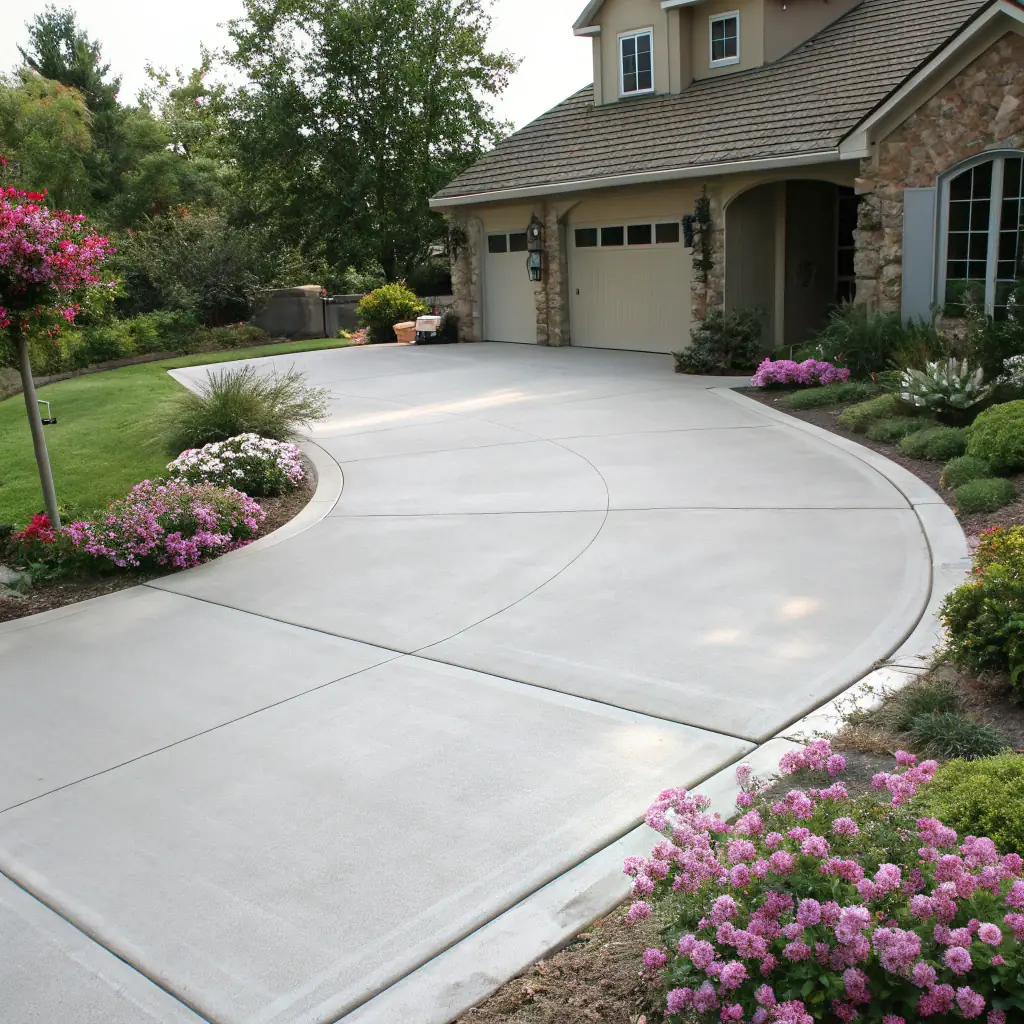
Concrete Driveways
Your driveway is one of the most visible features of your property and endures constant use. A professionally installed concrete driveway provides durability, curb appeal, and excellent ROI—lasting 30-50 years with minimal maintenance.
Complete Driveway Services:
New Concrete Driveways:
- Site excavation and preparation
- Proper base installation (4-6 inches compacted road base)
- Subgrade preparation and compaction
- Concrete forming and reinforcement
- 4-6 inch thick concrete (5,000+ PSI mix)
- Rebar or wire mesh reinforcement
- Control joint installation for crack control
- Professional finishing (broom, smooth, or decorative)
- Sealing for protection and longevity
Driveway Extensions & Additions:
- RV parking pads
- Additional parking spaces
- Turnaround areas
- Approach apron widening
Decorative Driveway Options:
- Stamped concrete (brick, stone, slate patterns)
- Colored concrete (integral or acid stain)
- Exposed aggregate for texture and traction
- Borders and accent strips
Oklahoma Driveway Considerations:
Base Preparation is Critical: Oklahoma’s clay soil requires proper base preparation. We excavate to proper depth, install 4-6 inches of compacted road base, and ensure proper subgrade compaction to prevent settling and cracking.
Proper Thickness: Standard driveways should be minimum 4 inches thick. For heavy vehicles (RVs, work trucks), we recommend 5-6 inches. Proper thickness prevents cracking under load.
Reinforcement: Wire mesh or rebar reinforcement distributes loads and prevents cracks from spreading. We include reinforcement in all driveway installations.
Drainage Design: Driveways must shed water efficiently. We establish proper crown (center peak) or cross-slope (side-to-side slope) to prevent water pooling and ice formation.
Control Joints: Properly spaced control joints (typically every 10 feet) direct where concrete cracks, keeping cracks straight and narrow rather than random and wide.
Freeze-Thaw Protection: Oklahoma experiences freeze-thaw cycles that can damage concrete. We use air-entrained concrete and proper finishing techniques to resist freeze-thaw damage.
Typical Driveway Timeline: 3-5 days from excavation to completion, 7 days before light use, 28 days for full cure
Investment Range: $8-$15 per square foot for standard driveway, $12-$20+ for decorative finishes
Concrete Patios & Outdoor Living Spaces
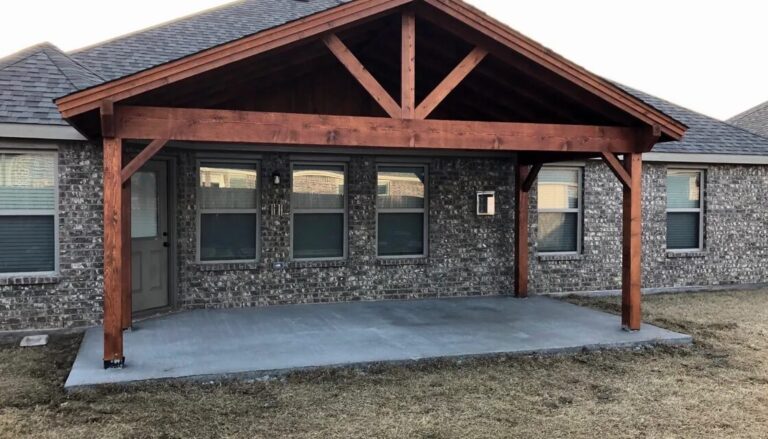
Transform your backyard into an entertainment oasis with a beautiful, durable concrete patio. From simple slabs to elaborate outdoor kitchens, we create outdoor living spaces perfect for Oklahoma’s pleasant spring and fall weather.
Patio Services:
Standard Concrete Patios:
- Custom sizing and shapes
- Proper base preparation and drainage
- 4 inch thick reinforced concrete
- Broom, smooth, or textured finishes
- Control joints for crack control
- Sealing for protection
Decorative Patio Options:
Stamped Concrete:
- Realistic stone, brick, slate, or tile patterns
- Multiple pattern and color options
- Texture adds traction for safety
- More affordable than natural stone
- Popular patterns: Ashlar slate, random stone, European fan, wood plank
Colored Concrete:
- Integral color (mixed throughout concrete)
- Acid stain (creates variegated, natural look)
- Concrete dye (vibrant, uniform color)
- Multiple color options to match home exterior
Exposed Aggregate:
- River rock, pea gravel, or decorative stone exposed
- Excellent traction and durability
- Natural, textured appearance
- Cooler underfoot than smooth concrete
Borders & Accents:
- Contrasting borders around patio perimeter
- Decorative bands and patterns
- Integrated planters and landscape features
- Custom scoring and saw-cut designs
Outdoor Kitchen Foundations:
- Concrete pads for built-in grills
- Outdoor kitchen island bases
- Bar seating areas
- Fire pit surrounds
Covered Patio & Pergola Footings:
- Concrete footings for structure support
- Post anchors and connections
- Proper depth for frost protection
- Coordinated with patio installation
Oklahoma Patio Design Considerations:
Shade Planning: Oklahoma summers are hot. We help plan patio orientation and size to work with existing shade or planned pergolas and shade structures.
Drainage Away from Home: Patios must slope away from house foundations (minimum 2% slope). We ensure proper drainage to protect both patio and foundation.
Expansion Joints: Where patios meet house foundations, we install proper expansion joints to allow independent movement and prevent damage to either structure.
Tree Root Protection: Mature trees create beautiful outdoor spaces but roots can lift concrete. We plan around existing trees and use proper techniques to minimize root conflict.
Typical Patio Timeline: 2-4 days for most residential patios
Investment Range: $8-$12 per square foot for standard patio, $12-$25+ per square foot for stamped or decorative
Concrete Sidewalks & Walkways
Sidewalks and walkways enhance curb appeal, improve accessibility, and create safe paths around your property. From simple front walks to elaborate garden paths, we build sidewalks that last.
Walkway Services:
Front Entry Sidewalks:
- ADA-compliant slopes and dimensions when needed
- Proper width (minimum 36 inches, 48 inches recommended)
- Non-slip finishes for safety
- Coordinated with landscaping
Side Yard & Backyard Walks:
- Paths to gates, sheds, and outdoor features
- Garden pathways and landscape integration
- Curved and custom-shaped walks
- Stepping stone designs
Driveway Approaches & Connections:
- Sidewalk connections to driveways
- ADA-compliant ramps and transitions
- Proper slope and drainage
Decorative Walkway Options:
- Stamped patterns (stone, brick, pavers)
- Colored and stained finishes
- Exposed aggregate surfaces
- Borders and accent bands
Typical Sidewalk Timeline: 1-2 days for most residential sidewalks
Investment Range: $6-$10 per square foot for standard sidewalk, $10-$18+ for decorative
Concrete Foundations & Slabs
Foundations are literally the foundation of your home. We pour residential and commercial foundations built to last and meet all local building codes.
Foundation Services:
Slab-on-Grade Foundations:
- Most common Oklahoma foundation type
- Monolithic pour (footing and slab together)
- Proper depth footings (minimum 18 inches below grade)
- Rebar reinforcement grid
- Vapor barrier under slab
- Proper base preparation on compacted soil
Stem Wall Foundations:
- Concrete block or poured walls on concrete footings
- Crawlspace access under home
- Better suited for sloped lots
- Allows HVAC and plumbing access
Basement Foundations:
- Full or partial basement excavation
- Poured concrete walls (8-10 inches thick)
- Waterproofing and drainage systems
- Egress windows for code compliance
Garage & Addition Foundations:
- Foundations for detached garages
- Addition foundations tied to existing structure
- Proper reinforcement and connection details
Oklahoma Foundation Requirements:
Clay Soil Considerations: Foundations must be designed for Oklahoma’s expansive clay soil. We use proper depth (minimum 18 inches below grade), adequate reinforcement, and moisture management techniques.
Frost Protection: Oklahoma’s frost line is 18 inches deep. All footings must extend below this depth to prevent frost heave.
Moisture Barriers: Vapor barriers under slabs prevent ground moisture from wicking into concrete and creating problems.
Proper Drainage: Foundation drainage (drain tile around footings) prevents hydrostatic pressure buildup and basement water issues.
Inspection Requirements: Foundation work requires building permits and inspections. We handle all permitting and coordinate inspections.
Typical Foundation Timeline: 5-10 days from excavation to pour, 7-14 days cure before framing
Investment Range: $5-$8 per square foot for slab-on-grade, $8-$15+ per square foot for basement foundations
Concrete Garage Floors & Shop Slabs
Whether you’re building a new garage, finishing an existing garage floor, or creating a workshop space, a quality concrete slab provides a durable, easy-to-maintain surface.
Garage Floor Services:
New Garage Slabs:
- Site excavation and base preparation
- Vapor barrier installation
- 4-6 inch thick concrete (higher PSI for vehicle loads)
- Trowel-smooth finish or light broom
- Control joints for crack control
- Optional slope to door for drainage
Existing Garage Floor Resurfacing:
- Surface preparation and cleaning
- Repair of cracks and damage
- Overlay or micro-topping application
- Decorative finishes if desired
Garage Floor Finishes:
Epoxy Coating:
- Durable, chemical-resistant surface
- Easy to clean (oil, grease wipe away)
- Available in multiple colors
- Decorative flake options for texture
- 2-3 year lifespan with typical use
Polyurea/Polyaspartic Coating:
- More durable than epoxy (10+ year lifespan)
- UV-stable (won’t yellow or fade)
- Chemical and abrasion resistant
- Fast cure time (use in 24 hours)
- Higher cost but better performance
Stained Concrete:
- Acid stain creates unique, variegated color
- Durable finish that won’t peel or chip
- Easy maintenance
- Can be sealed for easier cleaning
Workshop & Shop Slabs:
- Heavy-duty slabs for equipment and machinery
- Thicker concrete (6-8 inches) for point loads
- Fiber or rebar reinforcement
- Smooth trowel finish for tool carts and movement
- Optional floor drains and trenches
Typical Garage Slab Timeline: 2-3 days for pour and finishing, 7 days before vehicle use
Investment Range: $6-$10 per square foot for standard slab, $3-$6 per square foot for epoxy coating (existing slab)
Concrete Steps & Stairs
Concrete steps provide safe, durable access to your home or outdoor spaces. We build steps that meet code requirements and enhance your property’s appearance.
Step Services:
Front Entry Steps:
- Code-compliant tread depth and riser height
- Handrail anchors for safety rails
- Non-slip finishes for weather safety
- Decorative options (stamped, colored)
Deck & Patio Steps:
- Steps from patios to yard level
- Multi-level patio transitions
- Pool deck steps and entries
Retaining Wall Steps:
- Steps integrated with retaining walls
- Terraced yard access
- Landscape feature integration
Stoop & Landing Replacements:
- Remove and replace deteriorated steps
- Update to current code requirements
- Improve appearance and safety
Typical Steps Timeline: 1-2 days for most residential steps
Investment Range: $500-$2,000+ depending on size and complexity
Commercial Concrete Work
We handle commercial concrete projects of all sizes—from small business parking lots to large industrial slabs.
Commercial Services:
Parking Lots & Drive Lanes:
- Site preparation and base work
- Proper thickness for traffic loads (6-8 inches typical)
- ADA-compliant parking and access
- Striping coordination
Warehouse & Storage Slabs:
- Large-area concrete pours
- Fiber reinforcement for crack control
- Laser-guided screeding for flatness
- Joint spacing and placement planning
Retail & Office Foundations:
- Commercial building foundations
- Multiple-story building capability
- Engineered foundation systems
- Coordination with structural engineers
Loading Docks & Ramps:
- Heavy-duty concrete for truck traffic
- Proper slope and drainage
- Edge protection and dock plates
Sidewalks & ADA Compliance:
- Public sidewalks meeting city standards
- ADA-compliant ramps and crossings
- Proper detectable warning surfaces
Typical Commercial Timeline: Varies widely by project scope
Investment Range: Request custom quote for commercial projects
Decorative Concrete Options
Stamped Concrete
Stamped concrete replicates the look of stone, brick, slate, or tile at a fraction of the cost. It’s perfect for patios, driveways, pool decks, and walkways.
Popular Stamped Patterns:
Natural Stone:
- Ashlar slate (rectangular stone pattern)
- Random stone (irregular flagstone look)
- Cobblestone (rounded stone pattern)
- Fieldstone (natural stacked stone)
Brick & Pavers:
- Running bond brick
- Herringbone brick
- European fan (circular pattern)
- Basket weave
Specialty Patterns:
- Wood plank (realistic wood grain texture)
- Seamless texture (natural stone texture, no grout lines)
- Tile patterns
- Custom patterns
Color Options:
- Base color (integral color throughout)
- Release color (creates variegation and depth)
- Multiple color combinations
- Match existing hardscape
Stamped Concrete Benefits:
- Lower cost than natural stone or pavers ($12-20 vs. $20-40/sq ft)
- Faster installation than individual pavers
- No weed growth between “stones” (it’s solid concrete)
- Won’t shift or settle like pavers
- 20-30 year lifespan with proper sealing
Maintenance:
- Reseal every 2-3 years for protection
- Clean with mild soap and water
- Avoid deicing salts (use sand for traction)
Colored Concrete
Add personality to your concrete with custom colors—from subtle earth tones to bold accents.
Coloring Methods:
Integral Color:
- Color mixed throughout concrete during batching
- Most durable option (color won’t wear off)
- Consistent, uniform color
- Wide range of standard colors
- Best for driveways and high-traffic areas
Acid Stain:
- Chemical reaction creates unique, variegated color
- Natural, mottled appearance (no two projects identical)
- Penetrates concrete surface
- Earth-tone colors (browns, tans, terra cotta, green, blue-gray)
- Perfect for patios and decorative areas
Concrete Dye:
- Penetrating dye in vibrant colors
- More uniform than acid stain
- Wider color range including bright colors
- Can layer colors for custom looks
- Requires sealing for durability
Color-Hardener:
- Dry shake applied to wet concrete surface
- Creates durable, wear-resistant colored surface
- Used with stamping for best results
- Two-tone effects possible with release agents
Exposed Aggregate
Exposed aggregate reveals decorative stone within the concrete, creating a textured, natural-looking surface with excellent traction.
Aggregate Options:
- River rock (smooth, rounded stones)
- Pea gravel (small, uniform pebbles)
- Crushed granite (angular, sparkly appearance)
- Local creek rock (Oklahoma native look)
- Custom stone blends
Exposure Methods:
- Surface retarder (most common method)
- Wash-off after initial set
- Seeding decorative stone on surface
Benefits:
- Excellent traction (safer when wet or icy)
- Hides stains and imperfections
- Natural, timeless appearance
- Very durable surface
- Cooler underfoot than smooth concrete
Best Uses:
- Pool decks (traction around water)
- Driveways (attractive and functional)
- Patios (natural look blends with landscape)
- Walkways (safe in all weather)
The Concrete Installation Process
Step 1: Free Estimate & Consultation (1 Hour)
We begin every project by visiting your property to assess conditions and understand your goals.
What We Evaluate:
- Project scope and dimensions
- Existing site conditions and obstacles
- Soil type and drainage considerations
- Access for equipment and concrete trucks
- Grade levels and slope requirements
- Decorative options and preferences
What You Receive:
- Detailed written estimate with line-item pricing
- Material specifications (concrete PSI, thickness, reinforcement)
- Timeline expectations
- Decorative options and samples
- Permit requirements (if applicable)
Typical Turnaround: 2-5 days for estimates
Step 2: Site Preparation (1-2 Days)
Proper preparation is 80% of a successful concrete project.
Preparation Steps:
Excavation:
- Remove existing concrete (if replacement project)
- Excavate to proper depth (typically 8-12 inches total)
- Haul away excess soil and debris
- Coordinate utility locates (call 811)
Base Installation:
- Install 4-6 inches of compacted road base
- Laser level to proper grades
- Compact with plate tamper or roller
- Verify base is stable and properly sloped
Forms & Reinforcement:
- Install wood or metal forms to proper grade
- Set forms for desired thickness
- Verify forms are level, plumb, and secure
- Install rebar or wire mesh reinforcement
- Place chairs to hold reinforcement at proper height
- Install expansion joints where needed (against structures)
Final Prep:
- Install vapor barrier under slabs (where required)
- Final grade check with laser level
- Wet down subgrade before pour
- Have finishing tools ready
Step 3: Concrete Pour & Finishing (1 Day)
Pour day is when everything comes together. Our experienced crews work efficiently to ensure quality results.
Pour Day Process:
Concrete Delivery:
- Order proper concrete mix (PSI, slump, air entrainment)
- Coordinate delivery timing
- Position concrete truck for optimal placement
- Protect landscaping and driveways during delivery
Placement:
- Place concrete in sections
- Work concrete around reinforcement
- Eliminate air pockets with vibration
- Strike off excess with screed board
- Establish proper slopes and grades
Finishing:
For Broom Finish:
- Bull float for initial smoothing
- Edge around perimeter
- Groove control joints
- Final troweling
- Broom texture for traction
For Smooth Finish:
- Multiple trowel passes for glass-smooth surface
- Hard trowel finish
- Timing is critical (trowel too early = weak surface, too late = hard to finish)
For Stamped Concrete:
- Color hardener application
- Bull float smoothing
- Release agent application
- Stamp pattern imprinting
- Edge work and detail
- Antiquing release cleanup
For Exposed Aggregate:
- Surface retarder application
- Wait for concrete to set
- Pressure wash to expose aggregate
- Clean and rinse thoroughly
Curing:
- Apply curing compound or cover with plastic
- Protect from rain, extreme heat, or freezing
- Avoid traffic during cure period
Step 4: Curing & Cleanup (7-28 Days)
Concrete gains strength over time. Proper curing is essential for durability.
Curing Timeline:
- 24 hours: Remove forms
- 3-7 days: Light foot traffic OK
- 7 days: Light vehicle traffic OK (residential driveways)
- 28 days: Full cure and maximum strength reached
During Curing:
- Keep concrete moist (we may return to wet it down)
- Protect from extreme weather
- Avoid heavy loads and impacts
- No deicing salts for first winter
Final Steps:
- Remove forms after 24 hours
- Clean up job site completely
- Haul away forms and debris
- Apply sealer (if included or after cure period)
- Final walkthrough with customer
Oklahoma-Specific Concrete Considerations
Clay Soil & Foundation Movement
Oklahoma’s expansive clay soil creates unique challenges for concrete work:
The Problem: Clay absorbs water and expands (up to 10% volume increase), then shrinks dramatically when dry. This constant movement affects anything placed on or in the ground.
Our Solutions:
Proper Base Preparation: We excavate below unstable topsoil, install engineered base material (road base), and compact thoroughly. This stable base minimizes soil movement effects.
Reinforcement: Wire mesh or rebar distributes loads and prevents cracks from spreading. All our concrete includes proper reinforcement.
Control Joints: Strategically placed joints direct where concrete cracks (in straight lines at joints) rather than random cracking.
Expansion Joints: Where concrete meets structures, expansion joints allow independent movement without damage.
Foundation Isolation: Driveways, sidewalks, and patios are isolated from house foundations with expansion material, preventing stress transfer.
Freeze-Thaw Cycles
While Oklahoma has milder winters than northern states, freeze-thaw cycles still occur and can damage concrete.
The Problem: Water in concrete pores freezes, expands, and creates internal pressure that causes surface scaling and cracking.
Our Solutions:
Air-Entrained Concrete: We use concrete with proper air entrainment (microscopic air bubbles) that provides space for freezing water to expand without damaging concrete.
Proper Finishing: Over-troweling densifies the surface and traps water that can freeze. We use appropriate finishing techniques that leave concrete breathable.
Sealing: Penetrating sealers reduce water absorption while allowing concrete to breathe, protecting against freeze-thaw damage.
First Winter Caution: New concrete is most vulnerable its first winter. We recommend avoiding deicing salts the first year; use sand for traction instead.
Extreme Temperature Swings
Oklahoma experiences extreme temperature ranges—from below 0°F in winter to 110°F+ in summer.
Hot Weather Challenges:
- Concrete sets too quickly
- Surface dries before finishing completed
- Increased cracking risk
Our Hot Weather Solutions:
- Schedule pours for cooler morning hours
- Use retarders to slow set time
- Keep concrete and tools shaded
- Mist surface during finishing
- Apply curing compound immediately
Cold Weather Challenges:
- Concrete sets too slowly
- Freezing before adequate strength gain
- Reduced final strength
Our Cold Weather Solutions:
- Use accelerators to speed set time
- Heated water in concrete mix when needed
- Insulated blankets for curing protection
- Avoid pours when freezing temperatures forecast within 24 hours
Heavy Spring Rainfall
Oklahoma’s spring storm season affects concrete work timing and drainage planning.
Timing Considerations: We monitor weather forecasts closely and avoid pours when rain is likely within 24 hours. Fresh concrete damaged by rain cannot be repaired; it must be removed and replaced.
Drainage Planning: We ensure all concrete slopes properly to shed water. Standing water accelerates deterioration and creates freeze-thaw damage in winter.
Concrete Maintenance & Care
Sealing for Protection
Sealing protects concrete from water intrusion, staining, and freeze-thaw damage.
When to Seal:
- Wait 28 days after pour (concrete must cure fully)
- Decorative concrete: seal immediately after cure
- Standard concrete: seal after first year
- Reseal every 2-3 years for driveways
- Reseal annually for stamped/stained patios
Sealer Types:
Penetrating Sealers:
- Absorb into concrete surface
- Provide protection from within
- Don’t change appearance significantly
- Long-lasting (5+ years)
- Best for driveways and utilitarian surfaces
Film-Forming Sealers:
- Create protective layer on surface
- Enhance color and add sheen
- Make decorative concrete “pop”
- Require more frequent reapplication (2-3 years)
- Best for patios, stamped concrete, decorative finishes
Application: Professional application ensures even coverage and proper penetration. We offer sealing services for new and existing concrete.
Cleaning & Stain Removal
Regular Cleaning:
- Sweep or blow debris regularly
- Wash with garden hose and mild soap
- Pressure wash annually (use low pressure, wide fan tip)
- Avoid harsh chemicals and acid-based cleaners
Stain Removal:
Oil & Grease: Cat litter absorbs fresh spills; degreaser for set-in stains Rust: Oxalic acid or commercial rust removers Leaf Stains: Pressure washing typically removes Tire Marks: Hot water and degreaser Efflorescence (white powder): Brush off dry; vinegar solution for stubborn deposits
Winter Protection
Deicing Salt Caution: Salt damages concrete, especially new concrete. First winter, use sand for traction instead of salt. After first year, use salt sparingly and rinse off in spring.
Snow Removal: Plastic shovels prevent scratching. Avoid metal blades and snow blowers with aggressive augers.
Prevent Ice Dams: Keep gutters clean and downspouts extended to prevent ice buildup on concrete.
Crack Repair
Small Cracks (hairline to 1/4″): Concrete crack filler or caulk designed for concrete. Clean crack, apply filler, smooth surface.
Larger Cracks (1/4″+): May indicate structural issues. Contact us for assessment. Repairs may require routing crack, filling with epoxy or polyurethane, and sealing.
When to Worry: Cracks wider than 1/4″, cracks that continue to grow, vertical displacement (one side higher than other), or multiple cracks forming patterns suggest foundation or base problems requiring professional evaluation.
Frequently Asked Questions
Concrete costs vary based on project type, size, site conditions, and finishes. Here are typical ranges for the Oklahoma City metro:
Driveways: $8-$15 per square foot (standard), $12-$20+ (decorative) Patios: $8-$12 per square foot (standard), $12-$25+ (stamped/decorative) Sidewalks: $6-$10 per square foot (standard), $10-$18+ (decorative) Foundations: $5-$8 per square foot (slab-on-grade), $8-$15+ (basement) Garage Slabs: $6-$10 per square foot Steps: $500-$2,000+ depending on size
What Affects Price:
- Site preparation requirements (excavation, base work)
- Thickness and reinforcement needed
- Decorative finishes (stamping, coloring, exposed aggregate)
- Access difficulty
- Project size (larger projects = lower per-square-foot cost)
We provide detailed estimates with transparent, line-item pricing.
Expected Lifespan with Proper Installation & Maintenance:
Driveways: 30-50 years Patios: 40-60+ years Sidewalks: 40-60+ years Foundations: 80-100+ years Garage Slabs: 50+ years
Factors Affecting Lifespan:
- Quality of installation (proper base, reinforcement, finishing)
- Maintenance (sealing, cleaning, stain removal)
- Soil conditions (stable base vs. expansive clay)
- Traffic and use (light residential vs. heavy commercial)
- Climate exposure (protected vs. full sun/weather)
- Winter deicing salt exposure
Properly installed and maintained concrete in Oklahoma easily lasts 30-50+ years, making it one of the best long-term investments for your property.
PSI = Pounds per Square Inch (compressive strength)
3000 PSI Concrete:
- Standard residential concrete
- Adequate for most walkways, patios, floors
- Residential code minimum for many applications
- Lower cost
4000 PSI Concrete:
- Higher strength and durability
- Recommended for driveways (vehicle loads)
- Commercial applications
- Faster strength gain (can drive on sooner)
- Better freeze-thaw resistance
5000+ PSI Concrete:
- Commercial and heavy-duty applications
- High-traffic areas
- Foundation work
- Maximum durability
Our Recommendation: We typically use 4000 PSI for driveways and 3000-4000 PSI for patios and sidewalks. The cost difference is minimal ($5-10 per yard), and the durability improvement is worth it.
Yes, with proper precautions. We pour concrete year-round in Oklahoma, though extreme conditions require special measures.
Ideal Conditions:
- Temperatures 50-80°F
- No rain forecast for 24 hours
- Low wind
Cold Weather (Below 40°F):
- Use accelerators to speed set time
- Heat water in concrete mix
- Cover with insulated blankets during cure
- Avoid pours if freezing temperatures expected within 24 hours
- Monitor weather forecasts closely
Hot Weather (Above 90°F):
- Pour early morning (6-10 AM)
- Use retarders to slow set time
- Keep concrete shaded
- Mist surface during finishing
- Apply curing compound immediately
When We Won’t Pour:
- Rain forecast within 24 hours
- Freezing temperatures within 24 hours
- Extreme heat (100°F+) without morning scheduling
- Saturated or frozen ground
Usually Required:
- Foundation work (always requires permit and inspections)
- Structural slabs (garage slabs, large projects)
- Work affecting public right-of-way
- Commercial projects
Usually Not Required:
- Residential driveways (private property)
- Patios and walkways
- Small residential projects
- Repairs and resurfacing
We Handle Permits: When permits are required, we obtain them, pay fees, and coordinate inspections. Permit costs are included in estimates.
Important: Requirements vary by jurisdiction (Oklahoma City vs. Edmond vs. Norman vs. county). We know local requirements and ensure compliance.
Conservative Timeline:
- 7 days: Light vehicle traffic (passenger cars, light trucks)
- 14 days: Heavy vehicles (RVs, delivery trucks)
- 28 days: Full cure and maximum strength
Accelerated Timeline (with proper curing):
- 3 days: Light vehicles on 4000+ PSI concrete
- 7 days: Heavy vehicles
Factors Affecting Timeline:
- Concrete PSI (higher strength = faster usability)
- Weather (hot weather speeds cure, cold weather slows it)
- Thickness (thicker concrete cures slower)
- Load type (light vs. heavy vehicles)
Our Recommendation: Wait 7 days minimum for driveways. Driving on concrete too early causes surface damage that cannot be repaired—patience pays off with decades of service.
Short Answer: All concrete eventually cracks to some degree. The question is how much and where.
Why Concrete Cracks:
- Shrinkage as concrete cures (loses moisture)
- Temperature changes (expansion/contraction)
- Soil settlement or movement
- Freeze-thaw cycles
- Excessive loads
- Inadequate base preparation
How We Minimize Cracking:
Control Joints: We install control joints every 10 feet (driveways) or based on slab geometry (patios). Joints create intentional weak points where concrete cracks in straight lines rather than randomly.
Proper Reinforcement: Wire mesh or rebar holds cracks tight and prevents them from spreading or widening.
Adequate Thickness: Proper thickness for the application prevents flexing that causes cracking.
Quality Base: Properly compacted base prevents settlement cracks.
Proper Curing: Keeping concrete moist during cure reduces shrinkage cracking.
Realistic Expectations: Hairline cracks in control joints are normal and expected. Wide cracks (1/4″+), random cracking, or vertical displacement indicate problems.
Our Warranty: We warranty our work against defects in materials and installation. Normal hairline cracking at control joints is not a defect—it’s how concrete is designed to behave.
Matching Color: Concrete color varies based on mix design, cement source, curing conditions, and age. Perfect color matching is extremely difficult.
Better Options:
- Create intentional contrast (borders, accent strips)
- Use decorative finishes that don’t require matching
- Plan for eventual replacement of old concrete
- Stain or paint existing concrete to match new
What We Can Match:
- Texture (broom finish, smooth, exposed aggregate)
- Thickness
- Control joint spacing
- Finish level
Realistic Expectations: New concrete next to old will likely look different initially. Over time (1-2 years), color differences diminish as new concrete ages and old concrete is cleaned.
Service Areas
Wilson and Sons Construction proudly serves property owners throughout the Oklahoma City metro area:
Primary Service Areas: Oklahoma City | Edmond | Norman | Moore | Midwest City | Yukon | Mustang | Del City
Extended Service Areas: We also serve communities within a 25-mile radius of Oklahoma City. For larger commercial projects, we can often accommodate locations beyond our standard service area.
Ready to Start Your Concrete Project?
Whether you need a new driveway, decorative patio, solid foundation, or commercial concrete work, Wilson and Sons Construction delivers quality results built to last.
Get Your Free Concrete Estimate Today:
- Call: [PHONE]
We’ll visit your property, assess your project, and provide a detailed estimate with transparent pricing and realistic timelines.
Licensed | Insured | Locally Owned | 77+ Five-Star Reviews
Wilson and Sons Construction—Your trusted partner for concrete services in Oklahoma City and surrounding communities. Quality concrete work that stands the test of time.
