Planning a patio for your Oklahoma home? You’ve likely narrowed choices to two popular options: stamped concrete and pavers. Both create beautiful outdoor spaces, but which performs better in Oklahoma’s challenging climate? More importantly, which offers better value for your specific situation?
This comprehensive comparison examines stamped concrete and pavers through the lens of Oklahoma weather, lifestyle, budget, and long-term value to help you make the best decision for your property.
Understanding Your Options
Stamped Concrete
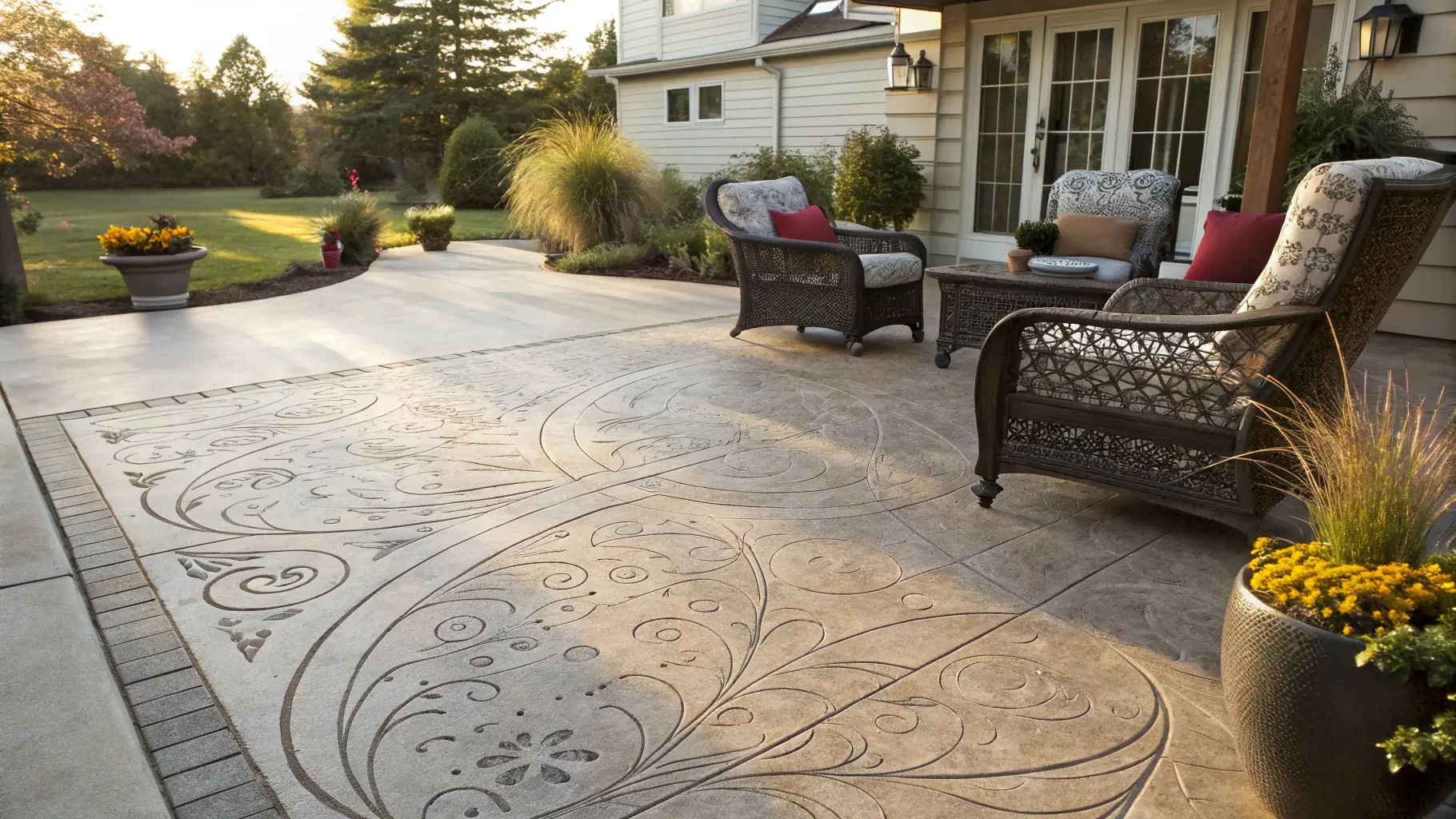
Stamped concrete is poured concrete textured and colored to resemble stone, brick, tile, or wood. Stamps are pressed into wet concrete to create patterns, and color is added through integral color (mixed in) or surface treatments (stain or hardener).
Popular Oklahoma stamped patterns:
- Ashlar slate (rectangular stone pattern)
- Random stone (irregular flagstone look)
- Cobblestone
- Wood plank
- Seamless texture (natural stone without grout lines)
Pavers
Pavers are individual units (concrete, brick, or natural stone) installed one-by-one over a prepared base. They’re set in sand and locked together, creating a flexible surface that can handle ground movement.
Common Oklahoma paver types:
- Concrete pavers (most popular, affordable)
- Clay brick pavers (traditional, warm color)
- Natural stone pavers (premium, unique)
Cost Comparison
Initial Installation Costs
Stamped Concrete:
- Average: $12-$20 per square foot installed
- 300 sq ft patio: $3,600-$6,000
- 500 sq ft patio: $6,000-$10,000
Pavers:
- Concrete pavers: $15-$25 per square foot installed
- Brick pavers: $20-$30 per square foot
- Natural stone: $25-$45+ per square foot
- 300 sq ft patio: $4,500-$7,500 (concrete pavers)
- 500 sq ft patio: $7,500-$12,500 (concrete pavers)
Winner: Stamped Concrete (typically 20-30% less expensive)
Long-Term Cost Considerations
Stamped Concrete Maintenance:
- Resealing every 2-3 years: $300-$600 per service
- 20-year maintenance: $2,000-$4,000
Paver Maintenance:
- Re-sanding joints every 3-5 years: $300-$600
- Weed control between pavers: $100-$200 annually (or DIY)
- Replacing damaged pavers: Occasional, $50-$200 per incident
- Power washing and re-sealing: $400-$800 every 3-5 years
- 20-year maintenance: $2,500-$5,000+
Winner: Relatively even (stamped concrete slightly lower maintenance costs)
Installation Time
Stamped Concrete:
- Site prep: 1 day
- Pour and stamp: 1 day
- Cure time: 7 days before use
- Total project: 2 days work, 1 week before use
Pavers:
- Site prep: 1-2 days
- Base installation and compaction: 1 day
- Paver installation: 1-3 days (depending on size)
- Edging and finishing: 1 day
- Immediate use after completion
- Total project: 3-6 days work, immediate use
Winner: Stamped Concrete (faster installation, though pavers usable immediately after completion)
Oklahoma Weather Performance
Freeze-Thaw Cycles
Oklahoma experiences 30-40 freeze-thaw cycles per winter. Water trapped in concrete freezes, expands, and causes damage.
Stamped Concrete:
- Properly sealed and air-entrained: Excellent freeze-thaw resistance
- Cracking can occur with poor installation or lack of maintenance
- Entire sections must be replaced if significant cracking occurs
Pavers:
- Excellent freeze-thaw performance
- Individual units flex independently
- Sand joints allow water drainage
- Damaged pavers easily replaced without affecting surrounding area
Winner: Pavers (better freeze-thaw performance in Oklahoma)
Heat and UV Exposure
Oklahoma summers bring 100°F+ temperatures and intense sun. Both options handle heat differently.
Stamped Concrete:
- Light colors reflect heat (cooler underfoot)
- Dark colors absorb heat (extremely hot in summer sun)
- Sealers can degrade with UV exposure
- Requires resealing to maintain color and protection
Pavers:
- Generally cooler than stamped concrete in similar colors
- Natural stone coolest option
- Color won’t fade (integral to material)
- Textured surfaces slightly cooler than smooth
Winner: Slight edge to Pavers (cooler underfoot, no color fading)
Clay Soil Movement
Oklahoma’s expansive clay soil (swells when wet, shrinks when dry) affects all hardscaping.
Stamped Concrete:
- Solid slab vulnerable to cracking from soil movement
- Proper base preparation critical
- Control joints help but don’t prevent all cracking
- Cracks are permanent and difficult to repair invisibly
Pavers:
- Flexible system adapts to minor soil movement
- Individual pavers can shift without cracking
- Easy to remove, adjust base, and reinstall
- “Self-healing” to extent pavers accommodate movement
Winner: Pavers (flexibility handles Oklahoma clay soil better)
Heavy Rain and Drainage
Oklahoma spring storms dump 3-5 inches in hours. Drainage is critical.
Stamped Concrete:
- Solid surface prevents water infiltration
- Requires proper slope for drainage (minimum 2%)
- Water runs off surface (can contribute to erosion if not managed)
- Pooling water can stain or damage sealer
Pavers:
- Sand joints allow some water infiltration
- Permeable paver options available for better drainage
- Less runoff than solid concrete
- Better for environmentally-conscious installations
Winner: Pavers (better drainage, especially with permeable options)
Appearance and Design
Realism and Aesthetics
Stamped Concrete:
- Convincing stone/brick appearance from distance
- Less realistic up close (uniform color, repeated patterns)
- Seamless appearance (no joint lines)
- Large open areas without interruption
- Color customization extensive
Pavers:
- Each paver naturally unique
- Authentic appearance (especially natural stone)
- Individual pieces create more natural randomness
- Joint lines part of design aesthetic
- Limited color options (depending on material)
Winner: Subjective (stamped concrete more seamless, pavers more authentic)
Design Flexibility
Stamped Concrete:
- Unlimited shapes and curves
- Can blend multiple patterns/colors
- Borders and accents easily incorporated
- Better for very large areas (no joints)
Pavers:
- Excellent for curves and intricate patterns
- Multiple paver colors can create designs
- Borders naturally defined by different pavers
- Better for smaller, defined spaces
Winner: Tie (both offer excellent design flexibility)
Durability and Longevity
Expected Lifespan
Stamped Concrete:
- Well-maintained: 20-25 years
- Neglected: 10-15 years (sealer failure leads to deterioration)
- Eventually requires replacement of entire patio
Pavers:
- Properly installed: 30-50 years
- Individual pavers last indefinitely
- Can replace damaged sections without full replacement
Winner: Pavers (significantly longer lifespan)
Repair and Maintenance
Stamped Concrete:
- Cracks difficult to repair invisibly
- Color matching nearly impossible
- Entire sections may need replacement
- Resealing every 2-3 years essential
Pavers:
- Individual damaged pavers easily replaced
- Sinking areas releveled by lifting pavers, adding base, reinstalling
- Stained pavers replaced or flipped
- Repairs virtually invisible
Winner: Pavers (far easier to repair and maintain long-term)
Staining and Wear
Stamped Concrete:
- Oil, rust, and organic stains difficult to remove
- High-traffic areas wear patterns visible over time
- Sealer protects but doesn’t prevent all staining
- Power washing can damage sealer
Pavers:
- Stained pavers can be replaced
- Wear distributed across many units (less noticeable)
- Power washing safe and effective
- Individual damaged pavers easily swapped
Winner: Pavers (easier stain removal and wear management)
Maintenance Requirements
Stamped Concrete Maintenance
Annual:
- Clean with mild soap and water
- Inspect for cracks or sealer damage
Every 2-3 years:
- Professional resealing ($300-$600 for average patio)
- Repair any cracks or damage
Long-term:
- Color fading if not properly sealed
- Sealer buildup requires stripping and reapplication
Paver Maintenance
Annual:
- Power wash to remove dirt and organic growth
- Weed control between pavers (polymeric sand reduces this)
- Inspect for settling or shifting
Every 3-5 years:
- Re-sand joints ($300-$600 for average patio)
- Optional resealing (not required but enhances appearance)
As needed:
- Replace damaged or stained individual pavers
- Relevel settled sections
Winner: Stamped Concrete (slightly less frequent maintenance, though both manageable)
Best Uses in Oklahoma
Choose Stamped Concrete If:
Budget is primary concern: 20-30% cost savings significant for many homeowners
Large, open areas: Seamless appearance better for big spaces
Smooth surface preference: Easier for furniture, toys, and bare feet
Low-traffic decorative area: Less wear means longer time between resealing
Maintenance commitment: Willing to reseal every 2-3 years
Choose Pavers If:
Long-term value priority: Higher upfront cost offset by 30-50 year lifespan
Oklahoma clay soil concerns: Flexibility accommodates ground movement better
Authentic appearance desired: Real brick/stone look important
Easier repairs valued: DIY repair capability saves money long-term
Drainage important: Permeable options for environmentally-conscious installations
Pool deck application: Cooler underfoot, better slip resistance
Hybrid Approach
Consider combining both materials:
Stamped concrete main area + paver border: Cost savings of stamped concrete with elegant paver framing
Paver main area + stamped concrete accent: Durability of pavers with artistic stamped concrete features
Different areas, different materials: Stamped concrete front patio, paver backyard entertaining space
The Wilson and Sons Recommendation
For Oklahoma homeowners, we typically recommend:
Pavers for:
- High-use entertainment areas
- Pool decks
- Properties with clay soil drainage challenges
- Long-term family homes (30+ years)
- Areas requiring frequent furniture moving
Stamped Concrete for:
- Covered porches (protected from weather)
- Large, open areas where seamless look preferred
- Budget-conscious projects
- Lower-traffic decorative spaces
- Homes likely to sell within 10-15 years
Both materials work well in Oklahoma when properly installed. The “best” choice depends on your priorities, budget, and how you’ll use the space.