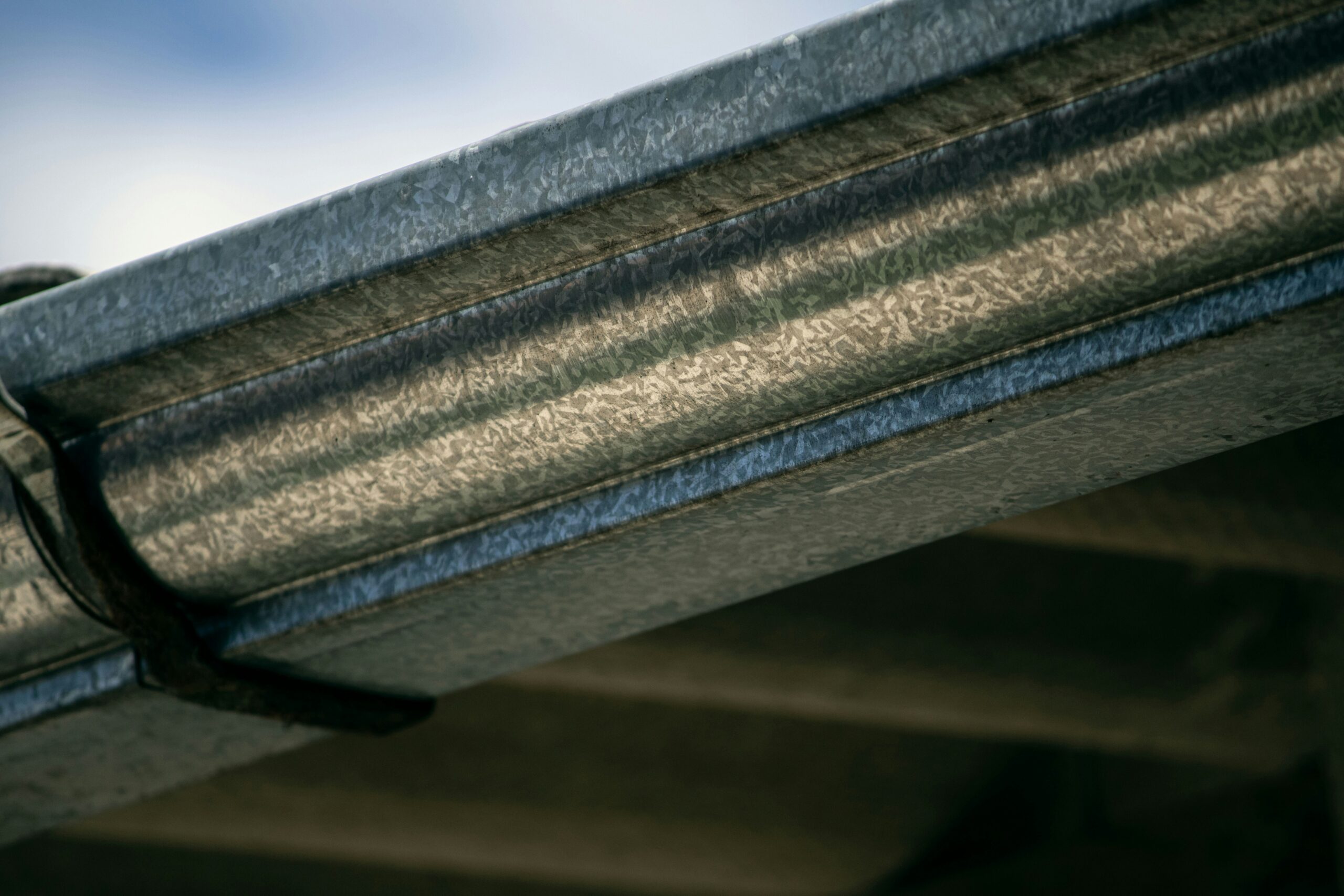
Gutters · Oklahoma Homeowner Guide
Seamless vs. Sectional Gutters: The Complete Oklahoma Homeowner’s Comparison
Wilson & Sons Construction · Oklahoma City Metro · 8 min read
Oklahoma gets more rain than most homeowners realize. At 36-plus inches per year — above the national average — combined with violent spring storms, ice events, and summer downpours, your gutters are not a decoration. They are a drainage system, and how well that system holds together over time depends almost entirely on whether it has seams.
If you are shopping for new gutters and trying to decide between seamless and sectional, this guide gives you the honest comparison — cost, durability, installation reality, and what actually makes sense for an Oklahoma home.
What Is the Actual Difference Between Seamless and Sectional Gutters?
The difference is structural, not cosmetic.
Sectional gutters are pre-cut lengths — typically 10-foot sections — that you join together with connectors and sealant. Every connection point is a potential failure point. The sealant dries out, the connector shifts slightly as the house moves seasonally, and eventually it leaks. You can buy sectional gutters at any home improvement store and install them yourself with basic tools.
Seamless gutters are fabricated on-site using a specialized roll-forming machine that feeds coil stock through dies and produces a single, continuous length of gutter cut to the exact measurement of your roofline. There are no joints from end to end — only at the corners and at downspout outlets, which are the minimum connections any gutter system requires. Because the machine is large and expensive, seamless gutters require a contractor to install.
Key Fact: Oklahoma’s Rainfall Demand
Oklahoma averages 36+ inches of rainfall per year — above the national average — concentrated in the spring storm season. Your gutter system needs to handle serious volume, fast, without leaking at any joint.
Seamless Gutters: Pros and Cons
The Advantages
- No mid-run leak points. The only seams are at corners and downspout drops — locations that can be sealed properly and are far fewer in number than a sectional system.
- Custom fit. Each gutter is cut to the exact length of your roofline. No gaps, no awkward overlaps, no sections that are slightly too short or long.
- Better hanger compatibility. Seamless gutters are almost always installed with hidden hanger systems — a bracket that clips inside the gutter and fastens to the fascia every 18-24 inches. This performs dramatically better in high-wind events than the older spike-and-ferrule system common on sectional installs.
- Gutter guard compatibility. The uniform, uninterrupted profile of a seamless gutter allows guards to seat cleanly along the entire run. Sectional gutters have raised connector lips that disrupt guard fit.
- Longer service life. Without connector sealant to degrade, well-installed aluminum seamless gutters routinely last 20-30 years in Oklahoma conditions.
The Disadvantages
- Higher upfront cost. Installed seamless gutters run $8-$15 per linear foot depending on material and profile. That is more than a DIY sectional install.
- Contractor required. You cannot buy the material at a hardware store and install it yourself. The on-site forming machine is contractor equipment.
- Damage requires a professional repair. If a section is hit by a falling limb, a contractor needs to reform and splice in a repair section.
Sectional Gutters: Pros and Cons
The Advantages
- Lower initial cost. DIY sectional installation runs $3-$6 per linear foot in materials — significantly cheaper if you are comfortable on a ladder and doing the work yourself.
- Widely available. You can buy sectional gutters at any home improvement store and carry them home the same day.
- Easy DIY repair. A damaged section can be replaced by the homeowner without specialized equipment.
The Disadvantages
- Every connector is a future leak. On a typical 1,500 square foot home with 150 linear feet of gutter, you might have 12-18 connectors. Each one will eventually need resealing or will leak.
- Wind vulnerability. Many sectional systems are spike-and-ferrule mounted — a nail driven through the gutter face into the fascia, with a cylindrical ferrule inside. The nail works loose over time, especially in Oklahoma’s wind events.
- Shorter effective life. With connector sealant degrading, expect to be resealing sections or replacing the gutters within 10-15 years in Oklahoma conditions.
- Gutter guard fit issues. The raised connector lips interrupt gutter guard profiles and can cause water to miss the guard or bridge over it during heavy rain.
Cost Comparison: Seamless vs. Sectional
| Factor | Sectional (DIY) | Seamless (Installed) |
|---|---|---|
| Cost per linear foot | $3–$6 | $8–$15 |
| 150 lin. ft. total estimate | $450–$900 | $1,200–$2,250 |
| Typical service life | 10–15 years (with resealing) | 20–30 years |
| Leak risk | High (every connector) | Low (corners and drops only) |
| Hanger system | Often spike-and-ferrule | Hidden hanger standard |
| Wind performance | Moderate | Significantly better |
| DIY installation | Yes | No — contractor required |
When Does Sectional Make Sense?
To be fair: there are situations where sectional gutters are a reasonable choice.
- Short-term repairs. If you need to patch a damaged section quickly and a contractor is not immediately available, sectional gutters can get you through a storm season.
- Detached structures. Workshops, sheds, and garages where the consequences of a minor leak are less critical and cost is the primary concern.
- Budget constraints. If your budget truly cannot accommodate seamless installation and you’re comfortable doing the work yourself, sectional is better than no gutters.
For a primary residence in the Oklahoma City metro, though, the economics over a 20-year horizon favor seamless — you will reinstall sectional gutters at least once within the life of one seamless system, and you’ll be resealing connectors every few years in between.
Gutter Materials: Aluminum, Steel, and Copper
Seamless gutters can be fabricated from several materials. Here’s what each means for Oklahoma homeowners:
- Aluminum (most common). Lightweight, rust-proof, and available in a wide range of colors. The standard choice for Oklahoma residential installations. Handles temperature swings well without becoming brittle. Most seamless gutters you’ll be quoted are aluminum.
- Steel. Heavier and stronger than aluminum, better for areas with frequent heavy hail since it dents less easily. Galvanized steel can rust at cut edges if not properly sealed. A step up in cost.
- Copper. Premium material that develops a distinctive patina over time. Extremely long-lasting but comes at a significantly higher price. Best suited for high-end homes where the aesthetic justifies the investment.
5-Inch vs. 6-Inch K-Style: Which Profile Do You Need?
K-style gutter profile — the flat-bottomed, ogee-front shape you see on most modern homes — comes in two common residential sizes: 5-inch and 6-inch. The width refers to the opening at the top.
5-inch K-style is the standard for most Oklahoma residential homes. It handles the drainage needs of a typical roofline without issue.
6-inch K-style handles roughly 40% more water volume. It becomes the right choice when your home has a steeper pitch, a large roof section that drains into a single gutter run, or if you’ve had overflow problems during heavy rain with 5-inch gutters. Oklahoma’s spring storms can deliver significant rainfall in a short period — 6-inch gutters provide more margin on large or steep roof sections.
Oklahoma’s Severe Weather Exposure
NOAA’s Storm Prediction Center documents Oklahoma as one of the most severe-weather-active states in the country — hail events, high-wind episodes, and ice storms all stress gutter attachment points and seams. Seamless systems with hidden hangers are the appropriate choice for this environment.
Why Wilson & Sons Only Installs Seamless Gutters
We install seamless gutters exclusively because after years of working in the Oklahoma City metro, we have seen what sectional gutters do in this climate. Connectors fail. Spikes work loose in high-wind events. Homeowners call us about water intrusion at fascia boards and foundation drainage problems — and when we trace the source, it is almost always a connector leak or a gutter that has pulled away from the fascia at a spike point.
We use hidden hanger systems on all installations. We match gutter size to your specific roofline geometry. And because we fabricate on-site, the gutter fits your home exactly — no gaps, no overlaps, no compromises.
If your roofing system also needs attention, our team handles residential roofing across the Oklahoma City metro — and it often makes sense to address both systems together if your roof is near end of life.
If you want a straight answer about what your home needs, call us at 405-230-3000 or request an estimate below. We’ll give you an honest assessment, not a sales pitch.
Frequently Asked Questions
How long do seamless gutters last in Oklahoma?
Aluminum seamless gutters typically last 20-30 years in Oklahoma when properly installed and maintained. Steel and copper options last even longer. Sectional gutters, by comparison, commonly develop leaks at the seams within 5-10 years as connectors degrade under Oklahoma’s temperature swings and weather stress.
Can I install seamless gutters myself?
No. Seamless gutters require a specialized gutter-forming machine that fabricates the gutter on-site to your exact measurements. This equipment costs tens of thousands of dollars and requires training to operate. Seamless gutters are contractor-only installations. If you want a DIY option, sectional gutters from a home improvement store are your alternative.
What size gutters do I need for my Oklahoma home?
Most Oklahoma homes are well-served by 5-inch K-style gutters. If you have a larger home, a steeper roof pitch, or a roof section that drains a large surface area, 6-inch gutters handle more volume and reduce overflow risk during heavy Oklahoma spring storms. A contractor should assess your specific roof geometry before recommending a size.
Do gutter guards work with seamless gutters?
Yes, and seamless gutters are actually better suited for gutter guards than sectional gutters. The uniform, uninterrupted profile of a seamless gutter allows gutter guards to seat properly along the entire run. Sectional gutters have raised connector lips that interrupt the guard’s surface and can cause fit issues or water bypass.
How does Oklahoma’s weather affect gutter performance?
Oklahoma averages over 36 inches of rainfall per year — above the national average — concentrated in spring storm season. Add hail events, ice storms, and high-wind episodes and gutters take a real beating. Seamless gutters with hidden hanger systems hold up significantly better in high-wind events than sectional systems mounted with the older spike-and-ferrule method. NOAA SPC documents Oklahoma’s severe weather exposure and it is among the most active in the country.
Ready to Replace Your Gutters?
Wilson & Sons installs seamless gutters across the Oklahoma City metro. Get an honest assessment and a detailed quote — no pressure, no surprises.