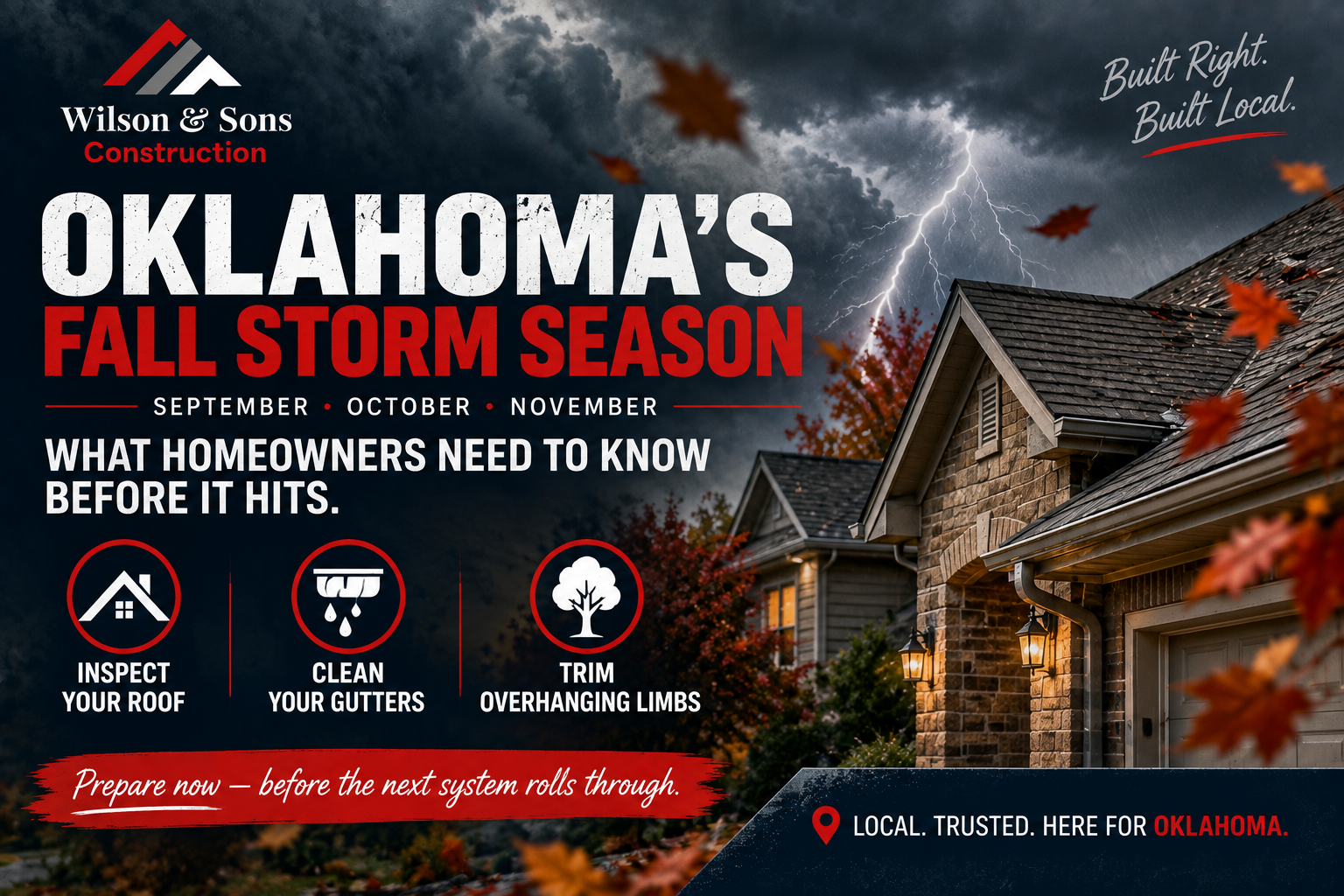
Oklahoma has a second, less-talked-about severe weather season every fall, generally running from September through November and most often peaking in October. It happens because the jet stream sinks south again after summer, once more setting up the same clash of cold, dry air and warm Gulf moisture that fuels tornadoes, hail, and high wind in spring — just on a smaller scale. The right time to prepare your home is now, before the first fall system rolls through, not after.
It’s easy for OKC-metro homeowners to overlook fall storms because so much attention goes to spring. But a hailstorm in October does the same damage to a roof as one in April, and your insurance carrier holds you to the same claim-filing deadlines either way.
Why Oklahoma Gets a Second Storm Season in the Fall
Fall storms aren’t a fluke — they’re a recognized seasonal pattern driven by the same large-scale weather setup that produces Oklahoma’s spring outbreaks, just triggered by the season changing in the opposite direction.
- The jet stream shifts south again. After retreating north for summer, the jet stream dips back over Oklahoma in the fall, bringing the upper-level wind energy that helps organize severe thunderstorms.
- Warm and cold air collide again. Gulf moisture is still available in early fall while the first real cold fronts start pushing down from the north — the same ingredient clash that fuels spring storms.
- October is typically the most active month. Of the fall months, October most consistently sees the highest severe weather activity in Oklahoma, though any month from September through November can produce a damaging system.
Oklahoma’s fall severe weather most often peaks in October, when the jet stream dips south again and reactivates the same storm ingredients seen every spring.
Get Your Home Ready Before Fall Storms Hit
A little prep work now is a lot cheaper than emergency repairs after a storm. Before fall weather picks up, walk your property and check the following:
- Have your roof inspected. Loose or lifted shingles, worn flashing, or hail damage from earlier in the year all get worse once a fall storm hits them directly.
- Clean out your gutters. Gutters clogged with summer debris can’t move fall rain fast enough, which backs water up under the roofline and into fascia boards.
- Trim overhanging tree limbs. Branches within striking distance of your roof are one of the most common causes of storm-related roof punctures.
- Photograph your roof’s current condition. Dated photos give you (and your insurance adjuster) a clear “before” picture if a storm causes damage later.
Photographing your roof’s condition before storm season gives you a documented baseline — it’s one of the simplest ways to avoid a dispute with an adjuster over what damage is actually new.
If a Fall Storm Damages Your Roof, Do This First
If a storm does move through and you spot damage, how you handle the first 24 hours matters:
- Photograph the damage as soon as it’s safe. Wide shots and close-ups both help document the extent of what happened.
- Cover exposed areas with a tarp. Preventing further water intrusion protects the rest of your home and shows your insurer you mitigated the damage.
- Get a local, trusted inspection before you sign anything. Be cautious of out-of-town crews going door-to-door right after a storm.
- File your claim promptly. Oklahoma gives you a set window to file — see our guide on how long you have to file a hail damage claim in Oklahoma for the specifics.
Frequently Asked Questions
It generally runs from September through November, with activity most often peaking in October as the jet stream shifts south again.
Fall storms can still produce damaging hail, high winds, and tornadoes, though outbreaks tend to be smaller and less frequent than during Oklahoma’s primary spring season.
Yes. A pre-season inspection catches loose shingles, worn flashing, or existing hail damage before a storm makes those weak points worse, and it gives you a documented “before” condition for insurance purposes.
Photograph the damage as soon as it’s safe, cover any exposed areas with a tarp to prevent further water intrusion, and get a local contractor’s inspection before filing your insurance claim.
Not Sure If Your Roof Is Ready for Fall Storms?
Get a free inspection from Wilson & Sons before the next system rolls through.