Roofing · Oklahoma Homeowner Guide
Metal Roofing in Oklahoma: A Complete Homeowner’s Guide to Types, Costs, and Performance
Metal roofing is having a moment in Oklahoma. After decades as the go-to material for barns, agricultural buildings, and commercial warehouses, metal is increasingly showing up on residential homes across the OKC metro — and for reasons that go well beyond aesthetics. In a state that ranks among the nation’s most hail-active, with scorching summers and temperature swings that can stress traditional asphalt shingles, metal offers a genuinely compelling performance case.
That said, metal roofing is not the right choice for every Oklahoma homeowner. It costs significantly more upfront, comes with its own set of trade-offs, and requires careful selection of the right product type for your home, budget, and neighborhood. This guide gives you the honest picture: what types of metal roofing exist, what they cost, how they perform in Oklahoma’s specific climate, and when asphalt still makes more sense.
Why Metal Roofing Is Growing in Popularity in Oklahoma
Three factors are driving increased interest in metal roofing among Oklahoma homeowners: hail resistance, longevity, and energy efficiency.
Hail resistance. Oklahoma sits in the core of “Hail Alley,” and the NOAA Storm Prediction Center consistently ranks Oklahoma among the top states for damaging hail events per year. Standard architectural asphalt shingles can be cracked, fractured, or stripped of granules by golf-ball-sized hail. Metal roofing — when rated to UL 2218 Class 4, the highest impact resistance classification — withstands those same impacts significantly better. Homeowners who have replaced asphalt with Class 4 metal often report filing far fewer storm damage claims in subsequent years.
Longevity. A quality asphalt roof in Oklahoma has a realistic lifespan of 20–30 years — and in the harsh UV environment of Oklahoma summers, sometimes less. Metal roofing, depending on the type, is rated for 40–70 years. For a homeowner who plans to stay in the same home for 30+ years, that can translate to only one roof replacement instead of two or three over that period.
Energy efficiency. Metal roofing with reflective pigment coatings reflects a larger portion of solar radiation than dark asphalt shingles. In Oklahoma summers, where cooling costs spike dramatically from June through September, reflective metal can reduce attic heat gain and trim air conditioning bills. The extent of those savings depends on insulation, attic ventilation, and the specific coating applied — but it is a legitimate benefit.
The Three Main Types of Metal Roofing for Oklahoma Homes
1. Standing Seam Metal Roofing
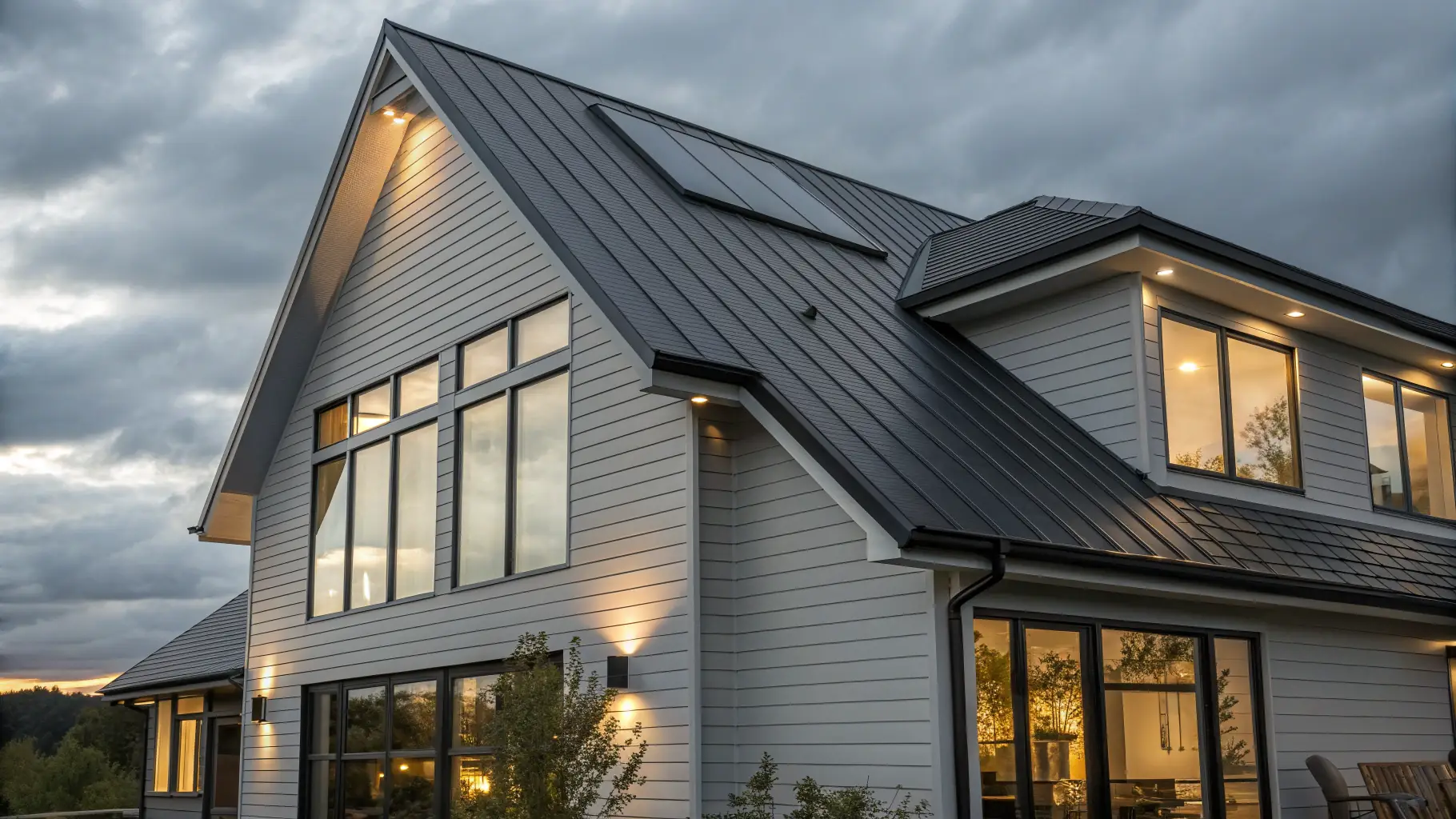
Standing seam is the premium option — and the one most homeowners picture when they think “metal roof.” It consists of vertical interlocking panels with raised seams that connect at the top, hiding all fasteners inside the panel system. There are no exposed screws or nails. This hidden fastener design is both the strongest structural feature and the primary reason standing seam outperforms other metal types over time.
Standing seam panels are typically made from Galvalume steel (the most common and affordable), aluminum (lighter and more corrosion-resistant), zinc, or copper (premium pricing). The panels are factory-formed and installed by experienced crews who understand the specific thermal expansion requirements of the system.
- Lifespan: 40–70 years with proper installation
- Installed cost: $12–$25 per square foot (roughly $24,000–$50,000 for a 2,000 sq ft home)
- Hail resistance: Class 4 when properly specified
- Best for: Long-term ownership, modern home aesthetics, steep or low-slope rooflines
- Watch out for: Requires skilled installation; steep rooflines add labor cost significantly
2. Corrugated and Exposed-Fastener Metal Panels
This is the more familiar agricultural look — wavy or ribbed steel panels with screws driven through the face of the panel into the decking. It is the least expensive metal roofing option and widely available. The trade-off is those exposed fasteners: each screw penetrates the metal panel and relies on a rubber washer to maintain a watertight seal. Over time — especially in Oklahoma’s temperature extremes — those washers compress, crack, and fail. An exposed-fastener roof that is not regularly maintained will eventually develop fastener-related leaks.
- Lifespan: 20–40 years (with fastener maintenance)
- Installed cost: $7–$14 per square foot
- Hail resistance: Moderate; depends on gauge of metal
- Best for: Agricultural buildings, sheds, garages, commercial structures
- Watch out for: Fastener failure over time; not ideal for steep-pitch residential without diligent upkeep
3. Stone-Coated Steel
Stone-coated steel is the option most residential homeowners in traditional neighborhoods choose when they want metal performance with a conventional appearance. The product consists of a steel panel coated with acrylic film and embedded stone granules — the result looks remarkably similar to asphalt shingles, Spanish tile, or wood shake, depending on the profile chosen. It can be a good fit for HOA neighborhoods that restrict standing seam but allow shingle-look alternatives.
- Lifespan: 40–70 years
- Installed cost: $10–$18 per square foot
- Hail resistance: Class 4 rated products are available and common
- Best for: Traditional neighborhoods, HOA communities, homeowners who want metal performance without the industrial look
- Watch out for: More expensive than asphalt; verify Class 4 rating on the specific product being installed
Metal Roofing vs. Asphalt Shingles: A Direct Comparison for Oklahoma
| Category | Metal Roofing | Asphalt Shingles |
|---|---|---|
| Upfront cost (installed) | $7–$25/sq ft | $4–$9/sq ft |
| Lifespan | 40–70 years | 20–30 years |
| Hail resistance | Class 4 (when specified) | Class 3–4 available; standard is lower |
| Weight | 1–3 lbs/sq ft (lighter) | 2–4 lbs/sq ft |
| Noise in heavy rain | Moderate (mitigated by solid decking & insulation) | Quieter |
| Insurance discount potential | Possible with Class 4 certification | Possible with Class 4 asphalt shingles |
| Energy efficiency | Reflective coatings reduce cooling load | Neutral (varies by color) |
| Maintenance | Low (standing seam); periodic (exposed fastener) | Moderate |
| Resale value | Premium positioning | Standard |
| HOA compatibility | Varies — check covenants | Almost universally accepted |
How Oklahoma’s Climate Affects Metal Roofing Performance
Oklahoma’s climate presents a specific set of conditions that are worth understanding before committing to any roofing material.
Heat and UV Exposure
Oklahoma summers are brutal. Surface temperatures on dark asphalt shingles can reach 150–170°F on a 100-degree day. Metal roofing with factory-applied reflective pigment coatings reflects a higher percentage of that solar energy — keeping attic temperatures lower and reducing the thermal stress on the roofing material itself. Over time, this can also mean less expansion-related wear on the roofing system.
Hail
This is where metal genuinely shines. Most Oklahoma homeowners who have experienced repeated hail claims understand the cycle: asphalt gets damaged, claim filed, insurance premium goes up, repeat. Class 4 rated metal breaks that cycle. Some Oklahoma insurers offer premium discounts of 15–35% for Class 4 rated roofing systems — though this varies by insurer, and you should confirm your specific discount before purchasing based on that expectation.
Thermal Expansion and Contraction
Oklahoma temperature swings can be dramatic — from freezing temperatures in January to 105-degree days in August. Metal expands and contracts with these swings, and homeowners sometimes report clicking or popping sounds from the roof during rapid temperature changes. This is normal thermal movement, not a structural defect. Standing seam systems are engineered specifically to accommodate this movement through floating clip systems that allow panels to slide without buckling.
Normal vs. Concerning Sounds: Clicking and popping during morning warm-up or after a cold front passes through is normal thermal expansion in metal roofing. Persistent creaking, banging, or sounds during rain accompanied by interior leaks are different — those should be inspected. If you have questions about your roof, schedule a free inspection with Wilson & Sons.
Ice and Freeze-Thaw Cycles
Metal roofing handles Oklahoma’s occasional ice events well. The smooth, low-friction surface sheds ice and snow more readily than asphalt shingles, and the interlocking panel system on standing seam is more resistant to ice damming than a standard shingle system. This is a genuine advantage during Oklahoma’s periodic winter ice storms.
What Drives the Cost of Metal Roofing in Oklahoma
The ranges above — $7 to $25 per square foot — are wide for a reason. Several factors move the needle significantly:
- Metal type: Steel Galvalume is least expensive; aluminum costs more; zinc and copper are premium materials used primarily in architectural applications.
- Panel system: Exposed fastener is cheapest; standing seam with concealed clips is most expensive due to material cost and installation complexity.
- Roof pitch and complexity: Standing seam on a steeply pitched roof or a complex roofline with multiple valleys and penetrations requires significantly more skilled labor hours.
- Existing decking: Metal can often be installed over existing asphalt shingles (with some limitations), but if the existing decking is damaged or rotted, it will need to be replaced — adding material and labor cost.
- Coatings and finishes: Kynar 500 and similar fluoropolymer coatings cost more than standard paint finishes but offer far superior UV and color fade resistance over decades.
When Metal Roofing Makes the Most Sense for Oklahoma Homeowners
Metal is not the universal right answer — but for specific situations, it is genuinely the superior long-term choice:
- You are replacing a 30+ year old roof and plan to stay in the home long-term (10+ years minimum to recoup cost difference)
- Your home is in a high-hail area and you have experienced multiple insurance claims on asphalt roofs
- Your insurer offers a meaningful Class 4 discount that reduces the payback period
- You own a commercial building or large agricultural structure where the cost-per-square-foot advantage of metal over time is more pronounced
- Energy efficiency is a priority — you want to reduce cooling costs in Oklahoma’s summer months
For commercial buildings and flat-roof applications, Wilson & Sons offers commercial roofing services including American WeatherStar Platinum coating systems, which provide an entirely different approach to commercial roof longevity.
When Asphalt Shingles Still Make More Sense
Metal roofing’s advantages are real — but so are its limitations. Asphalt shingles remain the right choice in a number of situations:
- Budget constraints: If the upfront cost difference between asphalt and metal is not financially feasible, a quality architectural asphalt shingle — including Class 4 impact-resistant options like those offered by IKO — is still a strong choice for Oklahoma’s climate.
- Near-term sale: If you plan to sell within 5–7 years, the payback period for metal roofing’s higher upfront cost is difficult to recoup in resale value. A new asphalt roof is typically a more cost-effective investment before selling.
- HOA restrictions: Many Oklahoma City metro HOA communities do not permit exposed-fastener metal panels or may restrict standing seam. Stone-coated steel is sometimes permitted, but always verify before spending money on materials.
- Contractor availability: Quality standing seam installation requires specialized crews and equipment. The pool of skilled metal roofing installers in OKC is smaller than the pool of quality asphalt contractors.
A Transparent Note About Wilson & Sons and Metal Roofing
Wilson & Sons Construction is primarily known for residential asphalt shingle roofing and commercial flat-roof systems across the Oklahoma City metro. We believe in giving homeowners accurate information even when that means pointing them toward the right solution rather than simply the one we perform most often.
If you are seriously considering residential metal roofing, we encourage you to call us at 405-230-3000 to discuss what we currently offer and whether we can meet your specific needs — or to get our honest assessment of the right path for your home. Our free roof inspection is a good starting point for any homeowner evaluating their roofing options.
Frequently Asked Questions: Metal Roofing in Oklahoma
Does metal roofing hold up to Oklahoma hail?
Metal roofing — particularly stone-coated steel and standing seam panels certified to UL 2218 Class 4 — performs significantly better than standard asphalt shingles in hail events. Class 4 rated metal can withstand 2-inch diameter hail impacts without cracking or structurally denting. However, not all metal roofing carries a Class 4 rating, and cosmetic denting on softer metals like aluminum can still occur with very large hail. Always verify the UL 2218 Class 4 rating on the specific product before purchasing.
How much more expensive is metal roofing vs. asphalt in Oklahoma?
Metal roofing costs significantly more upfront. Standing seam metal runs $12–$25 per square foot installed, compared to $4–$9 per square foot for standard architectural asphalt shingles. On a typical 2,000 square foot Oklahoma home, metal roofing could cost $24,000–$50,000 versus $8,000–$18,000 for asphalt. The payback comes through a longer lifespan (40–70 years for metal vs. 20–30 for asphalt) and potential energy savings from reflective coatings.
Will my HOA allow a metal roof in Oklahoma City?
Many Oklahoma City metro HOAs have restrictions on metal roofing, particularly exposed-fastener corrugated panels that carry an agricultural appearance. Stone-coated steel — which mimics the look of asphalt shingles or tile — is more commonly approved in residential HOA communities. Standing seam metal is sometimes permitted as well. Always review your HOA covenants and obtain written approval before committing to a metal roof installation.
Is metal roofing louder than asphalt during Oklahoma rainstorms?
Metal roofing can be noisier than asphalt shingles during heavy rain if it is installed over open framing without insulation or solid decking beneath. When metal is installed over a solid plywood or OSB deck with proper insulation, the noise difference is minimal — most homeowners report it is comparable to asphalt. In Oklahoma, where heavy spring rainstorms are common, make sure to discuss decking and insulation requirements with your contractor before installation.
Does Wilson & Sons install metal roofing?
Wilson & Sons Construction specializes in residential asphalt shingle roofing and commercial flat-roof coating systems (American WeatherStar Platinum) for the Oklahoma City metro. For residential metal roofing installations, we encourage homeowners to verify current offerings directly by calling 405-230-3000 or visiting our contact page. We are always happy to discuss your roofing needs and point you toward the right solution for your home.
Get a Free Roof Inspection from Wilson & Sons
Not sure if metal or asphalt is right for your Oklahoma home? Our licensed team gives you an honest assessment — no pressure, no upselling. Just straight answers.
Get Free Estimate Call 405-230-3000